
Best No Deposit Bonus Casinos in Canada and Ontario for 2026
- 1V.Vegas★ Editor’s PickNo Deposit Bonus
50 Free spins
Sign Up Now - 2VerdecasinoNo Deposit Bonus
50 Free spins
No Deposit BonusJoin Now - 3HellspinNo Deposit Bonus
50 Free spins
No Deposit BonusClaim Bonus - 4IcecasinoNo Deposit Bonus
50 Free spins
Join Now - 5magic365No Deposit Bonus
60 Free spins
No Deposit BonusClaim Bonus - 6SlotsgemNo Deposit Bonus
50 Free spins
No Deposit BonusVisit Casino - 7GGbetNo Deposit Bonus
50 Free spins
JOKERFS45No Deposit BonusJoin Now - 8IvibetNo Deposit Bonus
50 Free spins
No Deposit BonusSign Up Now - 9SlotoroNo Deposit Bonus
50 Free spins
Visit Casino - 10HitNSpinNo Deposit Bonus
55 Free spins
No Deposit BonusClaim Your Spins










Boho Casino and Lex Casino both enter BGaming on the studio line. On every other line the two records diverge: thirty rounds against a hundred, 40x against 45x, a ceiling of CAD 150 against one expressed as ten times the bonus, and a price per round that one of the two leaves blank. A name in common, and behind it not one figure in common. Those ten records were assembled around precisely that gap. Nine of them credit a studio, covered by five names between them, while eight separate condition forms run across all ten.
How the terms define a no deposit bonus
An award belongs to this category when it reaches the reader without requiring a qualifying deposit, unlike a promotion tied to a payment. The definition goes no further than that. Rounds, play conditions, withdrawal limits and strings are all determined by the wording published for each offer, and the category name decides none of those details.
Clause wording set beside banner wording
A banner has room for one idea and takes it. Clauses have room for fields, and a clause will occasionally raise a field while printing no value against it. Both can be accurate. What separates them is the proportion of an award that ends up on paper, and paper is the subject here.
The two ways a no deposit bonus can arrive
Rounds come tied to a title the terms identify, which settles where they can be played and leaves the stake on each with the operator. That makes the first of two shapes. The second is promotional credit: a lump of value that is not deposited money and is tied to no single game. All ten records chosen here use the first, which is a fact about them rather than about the category at large.
Rounds issued, against a sum of credit issued
With a sum of credit, the range it covers is for the terms to decide. Rounds run the other way: a title is named, and what one round costs is set by the operator. Seven records among the ten print that cost, which puts round value within reach. At the remaining three the line is open, and no figure is borrowed from another page to close it.
A reading key for the records compared below
Published strings set the running order below, taken alphabetically, and the four records that print no string follow the six that do, in the sequence the profiles give. A recorded field is doing the sorting, no judgment, and where a record lands says nothing about the record.
The key to the grouping below
That key was picked because it runs across the studio field instead of along it. The four records sharing one studio name come out at four separate points, rather than sitting together, so the concentration on that line surfaces later as a finding and not as a side effect of where the profiles happen to fall.
Field order inside a record, and what never gets ranked
Seven lines get tracked: the number of rounds in an award, the cost of one round, the condition on play, the ceiling over any withdrawal, the title assigned to the rounds, the studio credited beside it, the string published for entry. Every record below opens on a different one of the seven and takes the rest in its own order, covering all of them and giving a value where the terms give one and reporting the line as unstated where they do not. Nothing arrives from another page. No record is placed ahead of another, no figure is ranked against its neighbour, and a studio is never presented as having written a promotion.
Who qualifies, and what gets checked before credit
Wording of their own about eligibility is something these ten records do not carry. No household rule appears, nothing fixed to an address, no province set aside, no figure limiting how many awards one reader may hold.
Residency, and the checks run before credit appears
Does a record test which province a reader sits in; if so, what does it ask for; and what follows from an answer that does not fit? Those three go unanswered right through the set. A stricter requirement than the rules oblige is something an operator may run, and the requirement would then live in wording it publishes for itself. On eligibility this comparison reports silence, and silence on a line is a documentation state like any other.
Ten bonus records arranged by their published strings
Each record below takes its seven tracked lines in its own order, with values exactly as the terms print them. The six published strings come first alphabetically, then the four records withholding one. Sequence here ranks nothing.
Boho Casino: a 30-round award with a 40x condition
This award contains thirty rounds. Its play condition is 40x, while the withdrawal boundary is CAD 150. The terms do not state the cost of an individual round, so no total round value can be calculated for this entry and no figure is borrowed from another record.
Fruit Million sits on the title line. BGaming is documented as the studio, one of four credits that name takes across this selection. FMIL30 is the published string. A single line of the seven stands open, the price of a round, with values on the other six. Two further records also award thirty rounds, and both diverge from this one in their condition, their ceiling and their title. Two of its six filled lines find company in the set, the credited name and the round count. Its play condition, its withdrawal ceiling, its title and its string stand alone.

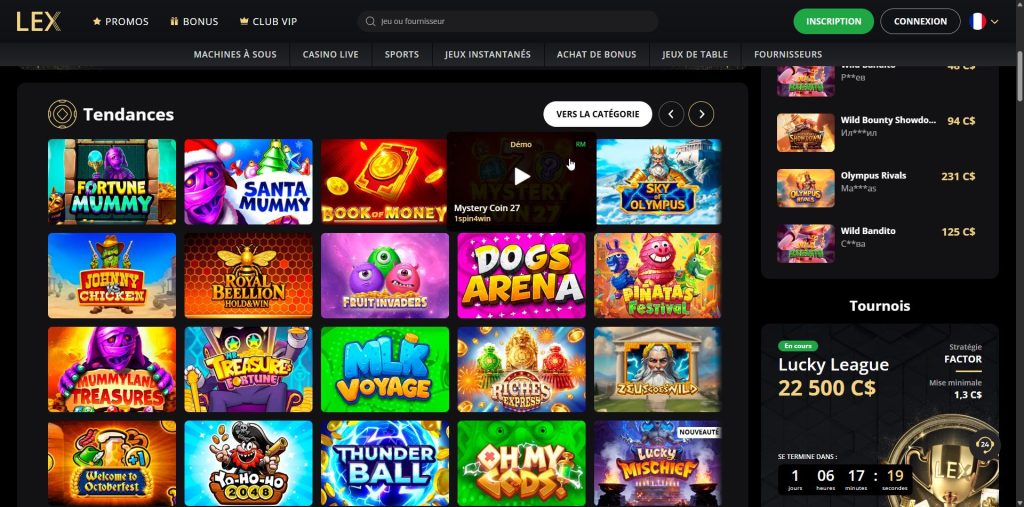
Lex Casino: a withdrawal limit tied to ten times the bonus
This record defines the ceiling through a multiple rather than a fixed sum: ten times the bonus. The amount to which that multiple applies is not printed, so no cash value can be derived from the page. The record lists 100 rounds, each valued at CAD 0.15, producing CAD 15.00 in total round value.
Book of Kemet fills the title line, and BGaming is documented as the studio, a name three other records here also credit. The string reads FSBONUS100, and the project register sets that string beside a wider group of brands, of which this record is the one present. 45x is the condition. Nothing on this page is left to an open line, which two further records in the set also manage. Three lines recur elsewhere: the per-round figure, the multiple and the studio credit. A hundred rounds, meanwhile, is a tally matched nowhere else here.
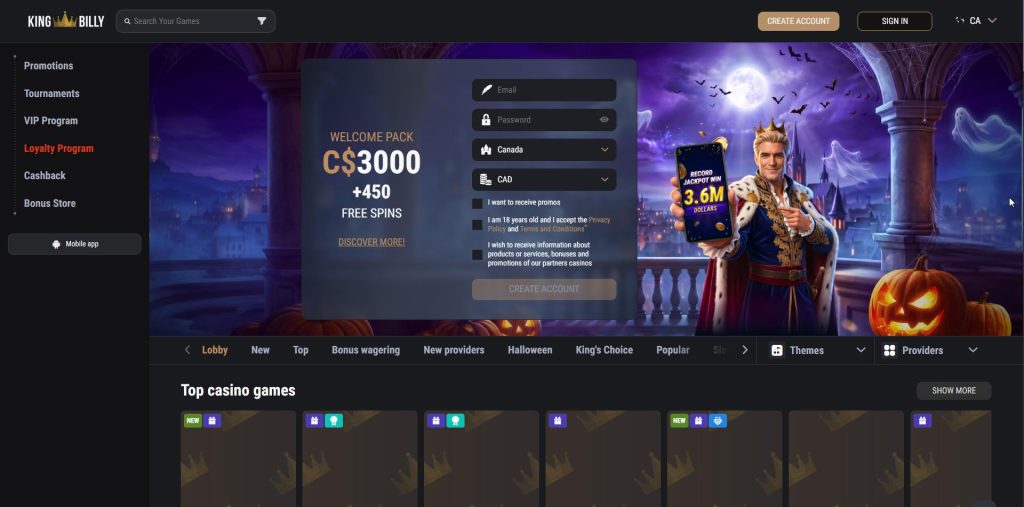
King Billy: one round priced at CAD 0.15
At this record, one round is priced at CAD 0.15, a figure matched by one other entry. With fifty rounds included, the package reaches CAD 7.50 in round value. The assigned game is Elvis Frog Trueways, named once across the ten, and the credited studio is BGaming.
The play condition is 50x, a figure repeated at one other record, while CAD 75 is the withdrawal ceiling and appears only once in this selection. FSBONUS50 is the published string. Every tracked line is completed. Price and condition answer different questions, and the CAD 7.50 calculated above represents round value rather than an amount the terms describe as withdrawable. Four lines recur elsewhere: round count, unit price, condition and studio credit. The withdrawal limit, title and published code are unique within this set. A fully completed record simply prints more fields; it does not make the offer itself more complete. Both figures remain exactly as published.
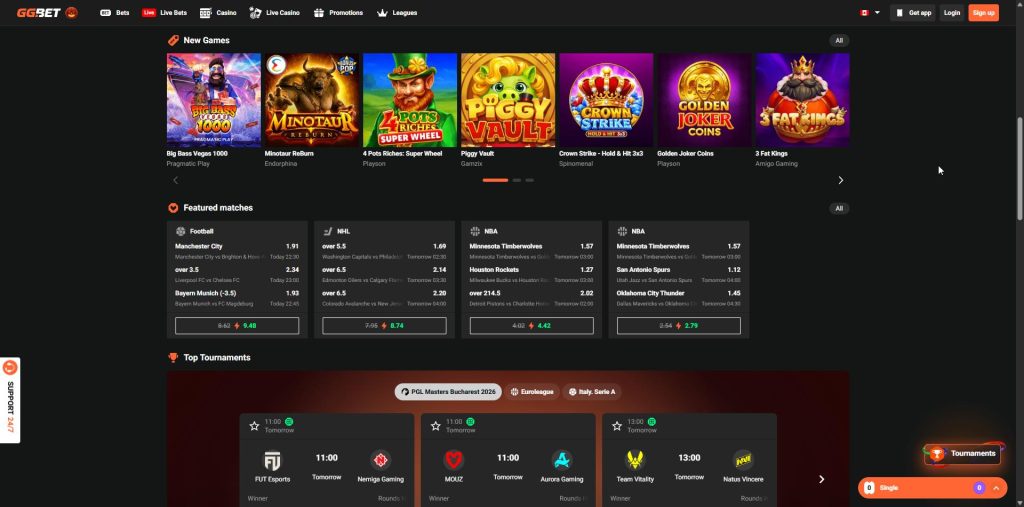
GGbet: a 30x condition beside a CAD 15 ceiling
This record uses a 30x play condition, a form that appears nowhere else among the ten. Its withdrawal ceiling is CAD 15, also unique in the set. The fifty-round package is priced at CAD 0.30 per round, producing CAD 15.00 in total round value; the similarity between that total and the ceiling is coincidental and the two figures describe different things.
Sweet Bonanza appears on the title line, while the studio field names Pragmatic Play, which is also credited at one other record. JOKERFS45 is the published string. Every tracked field carries a value. Of the two figures discussed above, one measures required play and the other sets a payout boundary, so they are read independently. The round count, unit price and studio credit recur elsewhere in the selection. Four fields are unique to this page: its condition, ceiling, assigned title and string. Sharing the same unit price as three other records does not make the offers otherwise alike.
SlotLounge: Aloha King Elvis on the title line
The title assigned at this record is Aloha King Elvis. BGaming appears as the documented studio, credited at three other entries in this selection as well. Thirty rounds are awarded, and the condition is 35x, a form appearing once over the ten.
Two lines stand open, the cost of a round and the ceiling, so values sit on five of the seven. Neither open line reaches past this page: nothing has been printed about a price, nothing written about a ceiling, and whether a boundary applies would be settled in wording published elsewhere by the operator. LIZARD is the string. Of the five filled lines, two recur: the tally of rounds, at two other records, and the studio credit, at three. The multiple, the game named and the published string are singular here. Five filled against two open is the shape, and the five are read as printed. An open line reports on a page, not on an offer.

Spinmills: Hacksaw Gaming credited on the studio line
Hacksaw Gaming is documented as the studio at this record, credited once here. The title is Le King, carried once as well. Fifty rounds make up the award, under a condition of 50x, a form one other record also writes.
Unwritten here are the ceiling and what a round costs, which leaves five lines with values. SPM50 is the string published. Filling that one line is the whole of what a studio entry does: who settled the condition, and who fixed the boundary beside it, are questions it leaves alone, and a credit given for a title reaches no further than the title. Its recurring lines number two, the quantity of rounds and the multiple. Title, studio entry and code published appear at this page alone. The one record sharing that multiple parts from this one on everything else tracked. Six records in the set award fifty rounds, this one among them.

Slotoro: a ceiling measured against winnings
The withdrawal ceiling is written as three times winnings, tying the boundary to a quantity rather than a fixed cash sum, while the referenced quantity itself is absent from the page. Gates of Olympus occupies the title field. Pragmatic Play appears on the studio line and is also credited by one other record in the set.
Round value across the fifty rounds comes out at CAD 15.00, each priced at CAD 0.30. 5x is the condition, written once in this selection. Only the string line is unwritten, so six of the seven hold values. A ceiling in this form will not reduce to one in Canadian dollars, nor the other way about, so the two are never read on one scale. Recurring here are the number awarded, the unit price and the studio credit. Singular to the page are its condition on play, its ceiling and its title. A ceiling referred to winnings and a factor of 5x make two readings on one page, each independent of the other.

Slotsgem: a condition given in sentences rather than a figure
Sentences do the work of a factor at this record, the one occurrence of that across the ten, and they carry over word for word, nothing numeric put in their place. CAD 0.38 is the cost of a round here, a price printed by no other entry in the set.
Across the fifty rounds, the calculated round value is CAD 19.00. Lady Wolf Moon Megaways is listed as the assigned title, while Booming Games appears in the studio field; each occurs once in this selection. The ceiling and string remain unstated, leaving five tracked lines with values. A condition written in sentences is still a stated condition rather than an open field, and it cannot be placed on the same numeric scale as the nine conditions expressed as figures. Only the round count is shared with other records. Four fields belong to this page alone: the unit price, the written requirement, the title and the credited studio. Shared lines describe documentation and nothing beyond it.

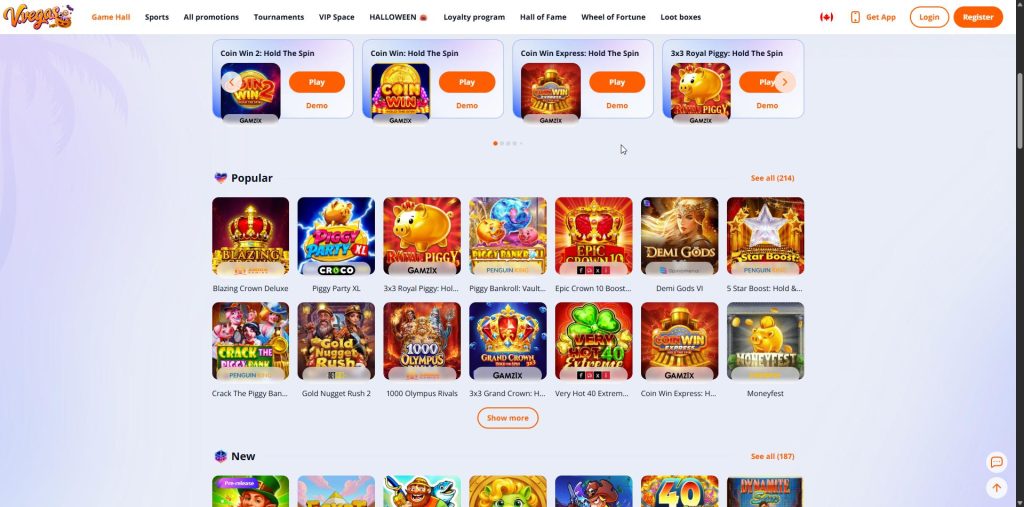
V.Vegas: Play’n GO credited for Book of Dead
Book of Dead is the assigned title, named a single time in this selection, with Play’n GO documented as the studio, also one appearance only. 3x is the condition, used at this entry alone, and the ceiling over a withdrawal reads CAD 38.
The package contains fifty rounds priced at CAD 0.30 each, which produces CAD 15.00 in round value. Only the string field is left open, so six lines carry values. Every recorded figure is read as printed: 3x describes play, while CAD 38 sets a boundary on money leaving the account, and the two are not compared as if they measured the same thing. The recurring fields are the round count and unit price. Unique to this page are the condition, withdrawal cap, game title and credited studio. Two other records pair fifty rounds with the same CAD 0.30 unit price, but the similarities stop there.
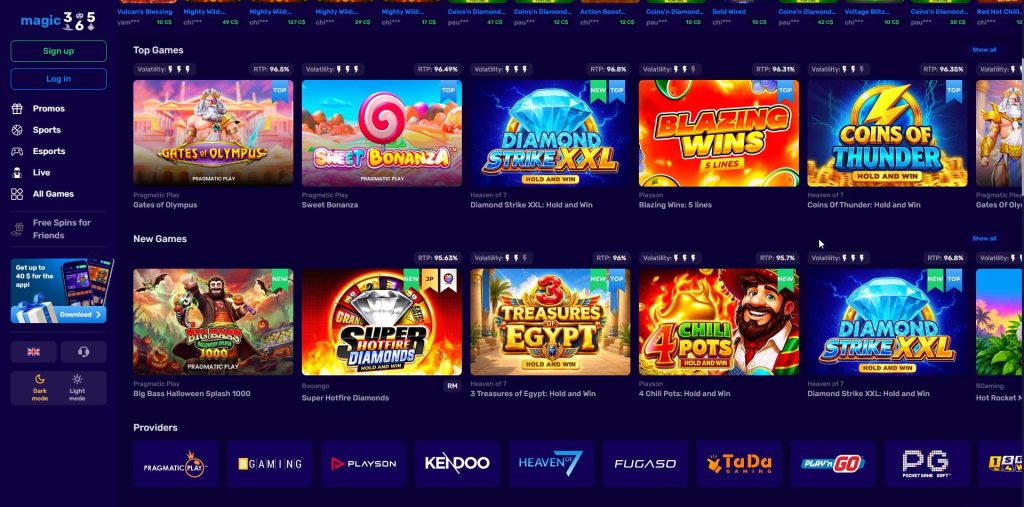
magic365: withdrawal ceiling set at CAD 8
This record places the withdrawal boundary at CAD 8, a figure seen nowhere else in the selection. Thirty rounds, each priced at CAD 0.30, produce CAD 9.00 in total round value. Its play condition is 45x, a figure shared with one other entry.
Panda Fortune Rush is the assigned title. The studio and string fields are both left unstated, so five of the seven tracked lines carry values. An open studio field reports only what this page does not print; it would be incorrect to describe the record as unbranded. Three filled fields recur elsewhere: the round count, unit price and condition. The ceiling and title appear only here. No other record in the set combines thirty rounds with a CAD 0.30 unit price.
Studio names counted against no deposit bonus condition forms
Opposite behaviour shows up on two of the seven lines, and putting the two distributions next to each other is all this section does.
Eight conditions for ten records, five names for nine
Start with the studio line. Nine records credit a studio, and five names cover those nine: one name at four records, a second at two, and three names at one record apiece. Nine credits, five names, and a tenth record that does not state a studio.
Next comes the condition field, documented at every record and spread across eight different forms. Two records use 50x and another two use 45x. The six single-occurrence forms are 40x, 30x, 5x, 35x, 3x and one condition written in sentences. One distribution clusters while the other spreads almost as widely as the selection allows. Neither pattern explains the other or supports a conclusion beyond its own column.
Why one multiple will not stand beside another
Setting the eight forms against one another is the move to avoid. A factor at any given record applies to a return those terms never supply, so two multiples do not amount to two readings of one quantity. The condition put in sentences sits further out: it has been stated, and placing it on the numeric scale would mean inventing a figure.
Conditions of play that ride on a no deposit bonus
Wording published under an award may fix the quantity of play required before whatever the rounds produce is treated as ordinary money. The published half of that is the factor. The quantity a factor is applied to is the other half, and it stays unstated throughout.
Four worked figures follow. Three come from the four records crediting one studio name, the fourth from outside that group, which demonstrates that the shared name predicts none of the numbers written next to it. Every return below is flagged as an illustration, and none of them is printed anywhere in the selection.
Begin with Boho Casino, inside the group of four. The cost of a round being unstated there, round value for that entry is out of reach, and no estimate replaces one. Its condition is 40x. Take CAD 16 as the illustrative return, and the factor calls for CAD 640 of play, alongside the CAD 150 ceiling that the record writes.
SlotLounge belongs to the same group, and again the cost of a round goes unstated. With an illustrative return of CAD 6 and a condition of 35x, the play called for reaches CAD 210. The ceiling line at that record is unwritten, which is a report on these terms and not the report of a boundary that does not exist.
Lex Casino is the third taken from the group. Put the illustrative return at CAD 18, and 45x calls for CAD 810 of play. The ceiling at this record is a multiple of the bonus, not a Canadian dollar amount, which means no figure can be lifted from the page, and that separates it from the first of these three.
V.Vegas sits outside that group. Its fifty-round package carries a CAD 0.30 unit price, bringing total round value to CAD 15.00. Using an illustrative return of CAD 13, the 3x condition requires CAD 39 of play, while the page records a CAD 38 withdrawal ceiling. Those figures remain separate because required play and a withdrawal boundary measure different things.
Multiples, prose, and the eight forms between them
Nine conditions are figures here and one is sentences. 50x and 45x stand at two records each; the other six forms stand at one apiece. Three of those four worked records credit one studio, and across every figure shown above they diverge.
Weighting that shifts the figure actually required
Place a wager while promotional funds are live and some proportion of it may count toward a condition, with the proportion decided by whatever the operator publishes about it. Weighting is that wording. Where it applies, the total a condition demands moves, while the factor itself reads exactly as printed.
None of that turns up in this selection. Percentages are recorded nowhere across the ten, nor weighting figures, nor titles marked out as excluded. On a point nobody raises, a reader has nothing to carry away in either direction.
Titles counting in full against titles counting in part
Rules of that kind can let a wager count fully, count partially, or count toward nothing at all, with the proportion reaching a condition varying between titles. None of that is supplied by these ten pages, and none of it is excluded by them either. The effect would fall on the duration of the work rather than its size.
Account settings sitting behind a no deposit bonus award
An incomplete account can hold up a payout wherever the account terms make room for that. No record among the ten names the fields a particular operator handles in that way.
Which settings have to be complete before anything moves
Name, birth date, address, a way of making contact, a payment instrument: the fields are familiar enough. Whether a particular operator wants them all completed ahead of credit, or only ahead of a payout, is a question these promotional pages never reach, and not one of them records an account field of any kind.
Currency chosen for the account a no deposit bonus lands in
Accounts are denominated, and the denomination is settled when the account is opened. Whether it can be changed afterwards is something the account terms address. None of that appears in this selection.
Why an account currency matters later rather than sooner
Every value in this comparison runs in Canadian dollars, because each of these pages prints its figures that way. Across the ten there is no currency setting recorded, no conversion step and no rate, leaving readers with accounts denominated elsewhere nothing converted to work from.
How a credited no deposit bonus shows up on screen
Under what heading do the proceeds of credited rounds sit with a condition unsatisfied, and for how long do they sit there? Neither question is answered at any of the ten, and nor is a third: whether a reader could tell such a balance apart from a funded one by looking.
Balance figures before a condition has cleared
No balance line, label or screen is named in the wording of these records. Displays are produced by account software, which a promotional terms page does not describe. Seven of the ten record a ceiling and all ten a condition, yet a boundary over a payout, a quantity of play and what shows on a display are three separate matters, and the third goes unaddressed.
Thresholds of eighteen and nineteen across the provinces
Nothing national sits above the two figures in force. Alberta, Manitoba and Québec are the three provinces at 18. Everywhere else in the country, meaning the other provinces plus all three territories, 19 applies.
Three provinces at eighteen, the rest at nineteen
Each of the two sets a minimum and not a maximum, and none of these ten records an age of its own. Provincial authority produces the split, nothing promotional, so a reader who moves between provinces meets a different figure while the offer in front of them stays as it was. Anything above what a province sets would be published by the operator.
Tax once a no deposit bonus has paid out
Provinces fix the figures in the section above; this question answers to a federal authority instead, and not one of these ten pages mentions it. On the Canada Revenue Agency’s view, wins from recreational gambling in this country are not taxable income. That principle attaches to a win, and not to any condition written next to a promotion. No two readers’ circumstances match exactly, and nothing here should be taken as advice on tax.
Winnings, windfalls, and the Canada Revenue Agency position
Recreational play produces a win that sits on one side of a line. Income from an activity carried on under some other character sits on the other. A particular reader’s own facts decide which of the two applies, and nothing in this comparison decides it, nor does any value these records print. The subject is left alone at all ten, so what is said here stays general.
Published strings across the records, including those that leave the field blank
FMIL30, JOKERFS45, FSBONUS50, FSBONUS100, LIZARD and SPM50. Six strings appear across six records, and no two of the six are alike, so six records carry six distinct strings.
Six strings published, four records withholding one
At the other four records the string line holds nothing. FSBONUS100, one of the six, belongs to Lex Casino, and a wider group of brands carries that same string according to the project register, of which a single member appears in this selection. Where the same string appears at several brands, the string itself is all that establishes. It brings no operator with it, no ownership, and no account of how activation works.
Identity papers between no deposit bonus rounds and a payout
Conditions attached to a payout, identity checks among them, sit in an operator’s account terms rather than in the wording published under a promotion. At all ten records that is where they sit.
Papers an operator may ask for at a first payout
An operator may request:
- documentation confirming identity
- a document verifying the residential address
- verification of the payment method being used
Documents go unnamed at all ten, as does any order for presenting them, and as does the stage at which a check might take place. Nothing resembling a chronology comes out of that: the request and its sequence both belong to the operator.
Claiming without putting money in beforehand
Two things are supported by what these records print, and nothing beyond the two:
- an account comes into existence
- at the six records publishing a string, a field stands ready to receive it
Sequence running from sign-up to credited rounds
Which field takes a string, the moment a string becomes effective, and whether any check accompanies it are unwritten throughout the set. A procedure, if a reader follows one, is the operator’s published procedure and not something assembled out of a comparison. These pages carry values. A value conveys what a term says and nothing more, and the order in which terms apply is no part of it.
Stake ceilings running for as long as the no deposit bonus rounds do
One session can be governed by two limits at once, and keeping the two apart matters here. A quantity of play is fixed by the first. How large one bet may be, while promotional funds stay live, is fixed by the second, and that second limit is recorded at no record among the ten, which reports on ten pages and makes no claim about stake ceilings at large.
Why a stake ceiling answers a different question
Compliance with one does not imply compliance with the other, in either direction, and nothing on these ten pages resolves the point. The two therefore stay apart throughout, and a figure attached to one is never carried over to the other.
Titles the rounds of a no deposit bonus land on
Fruit Million, Sweet Bonanza, Book of Kemet, Aloha King Elvis, Gates of Olympus, Elvis Frog Trueways, Lady Wolf Moon Megaways, Le King, Book of Dead and Panda Fortune Rush. Ten records, ten titles, none repeated, and the title field is one of three completed throughout the selection.
Ten titles, and the studios standing behind them
A title supplies the game that credited rounds get played on. Volatility, the proportion returned over time and the scale of payouts go unrecorded throughout the ten, which means a title put to any use beyond naming that game has been taken past its page. Nine titles have a studio documented next to them, and the tenth record does not state one.
Studios credited behind a no deposit bonus title
Five names, nine records: the arithmetic is worth setting out line by line before anything is read into it.
One name credited four times over
Four of the ten records enter BGaming as the studio, and no other name here is entered more than twice. Four credits are four credits. Nothing follows from them about how widely that name appears away from these pages. Nothing follows about who runs a promotion, who settled a factor, who put a boundary over a payout, or who chose a string. Among those four the round count, the cost of a round, the condition and the ceiling all differ.
Five names covering nine of the records
Pragmatic Play appears at two records. Booming Games is credited once, as is Hacksaw Gaming, and Play’n GO also appears once. Together with the four BGaming credits above, those entries account for all nine documented studio fields across five names. One record leaves the studio field blank, which reports on the page rather than on the studio itself; treating that record as weaker would mistake an exercise in documentation for one in quality. Four credits and a single credit are simply counts and carry no further implication.
Four columns measured over ten records
| Brand | Rounds | Price per round | Condition | Studio |
|---|---|---|---|---|
| Boho Casino | 30 rounds | not stated | 40x | BGaming |
| GGbet | 50 rounds | CAD 0.30 | 30x | Pragmatic Play |
| King Billy | 50 rounds | CAD 0.15 | 50x | BGaming |
| Lex Casino | 100 rounds | CAD 0.15 | 45x | BGaming |
| SlotLounge | 30 rounds | not stated | 35x | BGaming |
| Slotoro | 50 rounds | CAD 0.30 | 5x | Pragmatic Play |
| Slotsgem | 50 rounds | CAD 0.38 | prose wording | Booming Games |
| Spinmills | 50 rounds | not stated | 50x | Hacksaw Gaming |
| V.Vegas | 50 rounds | CAD 0.30 | 3x | Play’n GO |
| magic365 | 30 rounds | CAD 0.30 | 45x | not stated |
Taken downwards, the studio column shows the concentration in a single pass; taken across, any row gives four lines that belong to one record and to nothing else. Of the forty cells here, 36 hold a value: rounds and condition at all ten rows, studio at nine and price per round at seven. Ceilings, titles and strings have sections of their own and are given no column.
Payment rails the money leaves along
Interac, bank transfers, cards, e-wallets, prepaid products and cryptocurrency are the six families that turn up in the Canadian market. None of the ten records names a payment method of any kind, so no family is attached here to any brand, and nothing is claimed in either direction about which of the six these records accept.
Clearing times nobody commits to in writing
Naming a family identifies one arrangement for moving money, and identification is where it stops. Fees, speed, where settlement happens, who holds money in transit and how it is routed are separate questions a family name does not answer. Clearing times are figures, and no page among the ten prints one.
How long a no deposit bonus remains usable
Two moments could start a window, the landing of credit or the opening of an account, and neither is nominated anywhere in this selection, because a validity period is documented nowhere across the ten. That makes it the single tracked line the whole set passes over.
Counting a window from the moment of credit
No award here is written as running without end, and a closing date is supplied by no page. Three further points stay unanswered throughout: whether an interruption costs a reader their progress, whether progress can restart, and whether an award can be handed back part way. Windows of that shape are found in terms published elsewhere, and elsewhere is where a reader would have to go for one.
Provincial authority over a no deposit bonus
Each province regulates gambling within its own borders, so a rule made in one reaches no further, and nothing federal sits above those rules to be quoted instead. Governance may attach to an operator, to a jurisdiction or to the product offered, and no blanket statement about Canadian legality follows from it.
Thresholds set provincially, with nothing federal above them
On 13 July 2026, Alberta admitted private-sector operators to its regulated iGaming framework. Regulatory oversight is handled by Alberta Gaming, Liquor and Cannabis; the commercial role belongs to the Alberta iGaming Corporation. Each province determines an operator’s standing within its own system. These ten records say nothing about any of those points.
Registration under the Ontario framework
Ontario assigns the two functions to separate bodies. Regulatory supervision is handled by the Alcohol and Gaming Commission of Ontario, whereas iGaming Ontario acts as the operator counterparty. Private-sector operators entered the province’s registered iGaming market on 4 April 2022.
AGCO supervision alongside iGaming Ontario
Registered operators in Ontario cannot publicly advertise or promote gaming credits, inducements or bonuses. Those are the three categories identified here, and the record goes no further. The restriction does not extend beyond Ontario, none of these ten records links itself to that market, and the values printed on their pages remain unchanged by the rule.
Support a no deposit bonus holder can reach while rounds are live
Staff at an operator can explain wording that has been published, describe how a process at that operator runs, and confirm what a particular account currently holds. A term is changed by none of those three, and an explanation delivered over any channel does not rewrite what a page prints.
Chat, email, and the hours attached to each
An inbox, a telephone line, a chat window, or several at once, across whatever hours an operator publishes: arrangements vary, and these ten records name neither a channel nor an hour. Neither is reported here, then, and a reader wanting either has to look where the operator sets them out.
Kahnawake, and the permit a no deposit bonus may sit under
The Kahnawake Gaming Commission dates to 1996 and operates from the Mohawk Territory of Kahnawà:ke. Its online gambling framework has been in place since 1999.
A permit set beside a provincial registration
Three instruments need to be kept separate. A permit from that commission is distinct from registration by a province. Likewise, a licence issued outside Canada does not amount to Canadian provincial authorization, and provincial registration is neither of those two instruments. Holding one therefore says nothing about whether another is held. None of the ten records states which, if any, applies behind it, so no brand is linked here to any of the three.
Ceilings capping what a withdrawal carries
Regulatory instruments belong to authorities, as the section above sets out; the ceilings in this one belong to the terms, and two forms of them appear across the seven records that write a ceiling at all.
Dollar ceilings against ceilings written as multiples
CAD 150, CAD 15, CAD 75, CAD 38 and CAD 8 are the five ceilings expressed as Canadian-dollar sums. The remaining two use a multiple: one sets the limit at 10× the bonus, while the other ties it to 3× winnings. Neither page supplies the quantity needed to convert its multiple into a fixed cash figure. That leaves seven different ceiling values across seven records, with none repeated.
Seven ceilings recorded, three records silent
Three records say nothing on the ceiling line. What a written ceiling establishes is a boundary, and it travels unaccompanied: no promise is made, no payout follows, and the figure shown supports no claim. Does the boundary cover one withdrawal, a single calendar day, an account, one award? Unstated at all seven, and an answer would come from terms published somewhere other than the promotion.
Moving a no deposit bonus from promotional funds to withdrawable money
An operator may label promotional value cashable, or non-cashable. Both are words rather than figures, and the values these ten records print include neither.
Crossing from promotional funds into ordinary ones
Satisfying a condition does not by itself decide whether what the rounds produced can be moved, and that is decided by the wording governing an account. Promotional value kept separate from withdrawable money stays separate, where the governing wording provides for it. Three further points are unwritten right through the set: the make-up of a request, whatever has to go with one, and the time it takes.
Promotional rounds played on a handheld screen
The account terms handle conversion, as the section above explains, and the device a reader plays on is a separate matter again, because these ten records do not address it.
Smaller screens, the same recorded terms
An app’s existence, a browser’s behaviour, an interface matching across devices, progress carried over between devices: none of it is stated at any of the ten. Recorded values are recorded values whatever the screen; anything further is inference rather than reading. A reader wanting the device question answered takes it to whatever the operator publishes.
Deposit caps, pauses and exclusion periods in Canada
Three controls on the reader’s own side turn up in Canadian accounts, and the span of time each one covers is the plainest way to tell them apart.
Caps, pauses, exclusion lists, and helplines in Canada
A deposit cap works over a period written beside it, so its span repeats. A pause removes access for a stretch the reader fixes when setting it, so its span is chosen once and runs out. A self-exclusion register holds for a longer fixed stretch, is administered provincially, and operates independently of anything an account itself provides. Whichever of the three an operator offers, its own published wording is where that is stated.
Canadian support resources listed here include:
- Responsible Gambling Council — resource directory
- ConnexOntario support line — 1-866-531-2600
- Gambling Support BC — 1-888-795-6111
- Alberta Health Services Addiction Helpline — 1-866-332-2322
- Manitoba Addictions Help Line — 1-800-463-1554
- Saskatchewan Problem Gambling Help Line — 1-800-306-6789
Further questions readers may have about no deposit bonuses
What is a promotional page for, from the operator’s side of it?
It puts into print the terms on which an award is offered. Written to be read once and acted on, it carries what an operator has chosen to commit to and leaves the remainder to the account agreement. That division is why seven lines can be tracked over ten pages while a reader’s eighth question goes unanswered.
Does a promotion read differently in a comparison than it does on its own site?
Values are identical either way, since nothing is altered here. What a comparison adds is visibility of which values recur and which stand alone, and no single page tells a reader that about itself. CAD 150 looks the same on its own terms page as it does anywhere else; set beside nine other records, it becomes a ceiling written once in a set of ten.
Which of the seven tracked lines would a reader manage without most easily?
That turns on what the reader wants, though the set gives a clue. Rounds, condition and title are documented at all ten, so a reader relying on those three is never left short. Four lines are documented at fewer than ten: what a round costs, the ceiling, the studio, the string. A question needing one of those four may meet a quiet page.
What is a reader to make of two records that agree on every line tracked here?
No two of these ten agree on all seven, so the case is hypothetical here. Were it to come up, the two would remain two pages, each under its own account terms, eligibility wording and verification requirements, none of it tracked here. Agreement on seven published lines would establish agreement on seven published lines, and would not make either page a substitute for the other.
What does the Canadian setting add that one terms page cannot?
Provincial figures, regulatory instruments and the treatment of a win all come from authorities that these ten pages never mention, so a reader working from one page alone would meet none of the three. An age comes from a province, registration from one framework or another, and the tax position from a federal authority. A terms page can be read through completely and still leave all three untouched.
Is a studio name worth anything outside a comparison like this?
It identifies the game the rounds are assigned to, which is worth having for anyone wanting to know what they will be playing. Travelling further is what it does not do: a name on that line reports nothing about an operator’s promotion, the condition written beside it, or the boundary over a payout. One name here appears at four records whose figures have nothing in common.
What can a support desk confirm, and what should a reader settle beforehand?
The state of one account at one moment is what staff can confirm, and no amount of reading published wording achieves that. Published figures are the reverse case: already settled in print, they need no confirming, which makes them the part a reader can work out alone. Working them out first means the only questions left are the ones a desk is actually able to answer.
How does a promotional page relate to the account agreement underneath it?
Figures particular to one award are carried by the promotional page. Conditions on holding an account at all, who may open one, which papers a payout waits on, how money leaves and which currency applies, are carried by the agreement. Both govern at once, and a promotional page stopping where it stops is not a gap in it. Neither document on its own makes anything in this comparison usable.
Why would an operator publish a figure instead of wording?
A figure can be lifted off the page, which is what nine of these ten conditions allow. Wording covers cases a single number would not, and one record in the set puts its condition that way. Neither of the two forms is placed above the other here, and the practical difference is that arithmetic can be done with a figure while wording has to be read.
What would a reader need in order to compare promotions from two different markets?
The same seven lines, recorded the same way at each, in a currency they can read directly. Canadian dollars run through this comparison because every page prints them, and a figure from a market publishing in some other currency would need a rate and a point of conversion before it could join the same column.
Is any part of the reading the same at all ten records?
Three lines are. How many rounds an award carries, what condition applies to play, and which title has been assigned to the rounds can be put to any record here and answered from its page. The remaining four lines are documented at between six and nine of the ten, and a denominator therefore travels with every count here.
What is worth doing first on meeting one of these records?
Establishing which of the seven lines the page completes, ahead of looking at any value. A record stating six lines and one stating five are both readable, but they answer a different number of questions, and knowing which lines are open spares a reader hunting for a figure nobody printed. After that, the condition and the ceiling are the natural next two.
Does a shared studio name mean anything for the figures beside it?
It means only that the studio field matches. Across the four records crediting the same name, round counts range from thirty to one hundred; their conditions are 40x, 35x, 50x and 45x, while the ceilings include a multiple, a Canadian-dollar amount and one field left unstated. Sharing a studio name establishes only that shared field, and none of the surrounding figures follows from it.